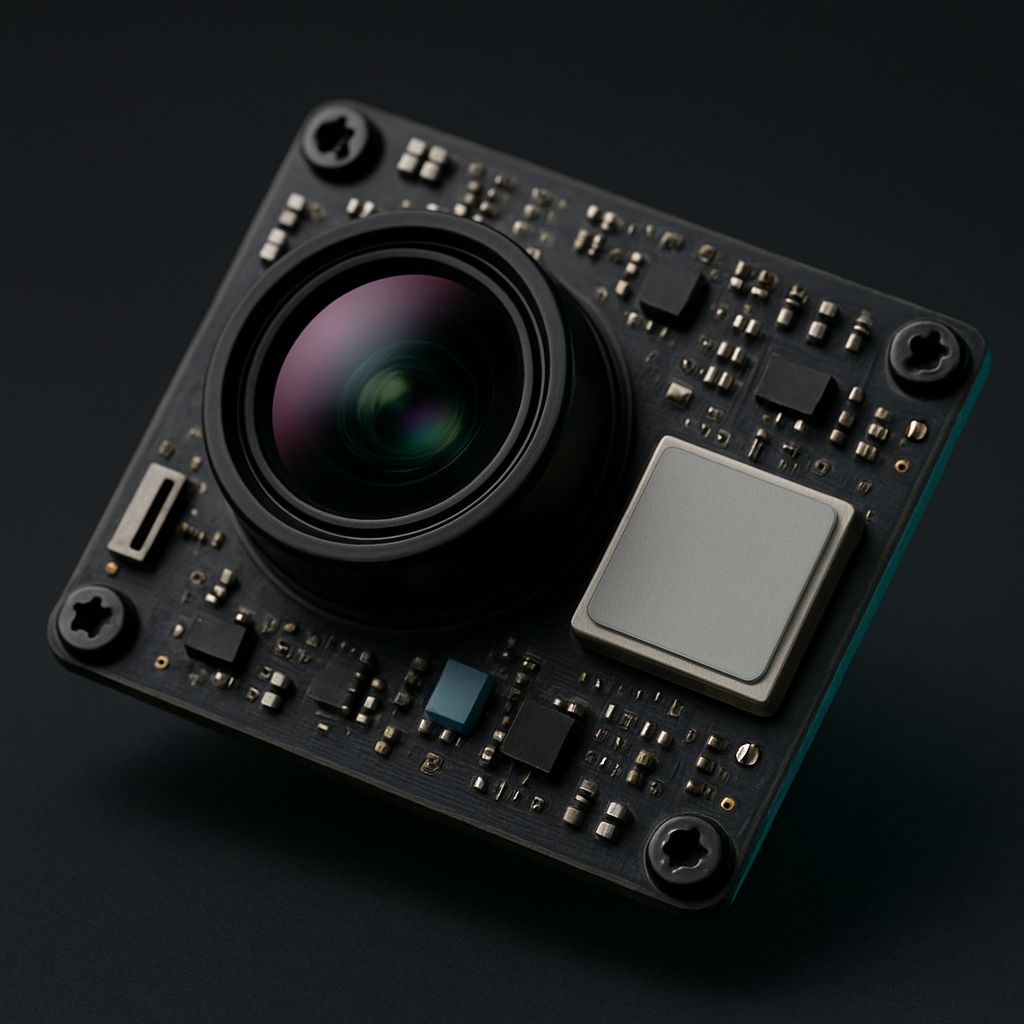
Edge Cameras · SPAD dToF · VL-SR-2M01
Spatial Robot
A miniature 8 m SPAD LiDAR array built for machines that move. 40 × 30 direct-ToF zones, sunlight-tolerant ranging, and gram-level weight — depth perception for AMRs, drones, and anything with wheels or wings.
$99 / unit
- Direct ToF (SPAD) with anti-sunlight algorithm — rated at 30 klux ambient
- 8 m range at 10 fps across 40 × 30 zones, ±2 cm close-range accuracy
- On-module processing: point cloud, depth, and confidence over USB-C (UVC/UDP)
- 7 g with casing — drone-ready weight and ~1 W power budget
- Point-cloud API in the SpatialAI SDK; ROS 2 driver on roadmap
Ships worldwide · 2-year warranty · Free community SDK tier included
Specifications
Technical specs
| Basic | |
|---|---|
| Use Environment | Indoor & Outdoor (anti-sunlight algorithm, 30 klux) |
| Technology | Hybrid-stacked SPAD dToF array |
| Interface | USB-C / FPC (UVC & UDP protocols) |
| SDK | SpatialAI SDK + DOMI SDK (Windows / Linux / ARM); ROS 2 on roadmap |
| Ranging | |
| Resolution | 40 × 30 |
| Range | 0.2 – 8 m @ 10 – 90% reflectivity |
| Accuracy | ±2 cm (0.2 – 1 m) · ±3 cm (1 – 3 m) · ≤1% (3 – 8 m) |
| Field of View | 60° (H) × 45° (V) |
| Frame Rate | 10 fps |
| Processing | On-module: calibration, temporal & flying-pixel filtering, scattering correction |
| Output | Point cloud, depth, confidence |
| Illumination | 940 nm VCSEL, Class 1 |
| Electrical | |
| Supply | 5 V, 1 A |
| Power | ~1 W |
| Physical | |
| Dimensions | 35.5 × 25 × 16 mm (with casing) |
| Weight | 7 g |
| Environmental | |
| Operating Temperature | -20 °C to 60 °C |
| Storage Temperature | -30 °C to 70 °C |
| Others | |
| Lifespan | 5 years, default operating mode & environment |
Code
Obstacle avoidance in eight lines
from spatialai import Camera

lidar = Camera("spatial-robot")

for cloud in lidar.point_clouds():
    if cloud.min_range() < 0.4:
        robot.emergency_stop()
Works with the free SpatialAI community tier. See the full quickstart →
Applications
Built for
AMRs & AGVs
Forward obstacle detection and docking guidance for mobile robots.
Drones & UAVs
Terrain following, landing assist, and indoor navigation.
SLAM
Depth constraints that stabilize visual-inertial mapping.
Safety Stops
Deterministic close-range stop zones, computed on-device.